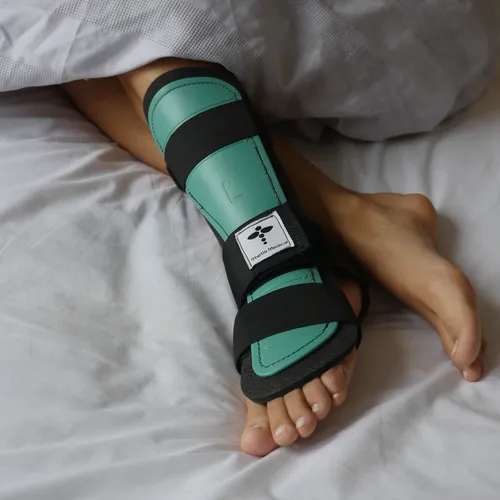
Cardio after Achilles rupture is one of the frustrating gaps in recovery. By around week 16-20, many patients are walking better and rebuilding strength, but they still cannot run, jump, or train hard enough to feel fit.
The answer is not to avoid cardio completely. It is to choose low-impact, controlled loading that gives your heart and lungs a stimulus without asking the tendon to do too much too soon.
Contents
- Key takeaways
- Why cardio is difficult after Achilles rupture
- Best cardio options after Achilles rupture
- How to progress cardio safely
- How to know if cardio is too much
- What this means for your recovery
- Frequently asked questions
- References
Key takeaways
- Cardio can return before running, but it should be low impact and controlled.
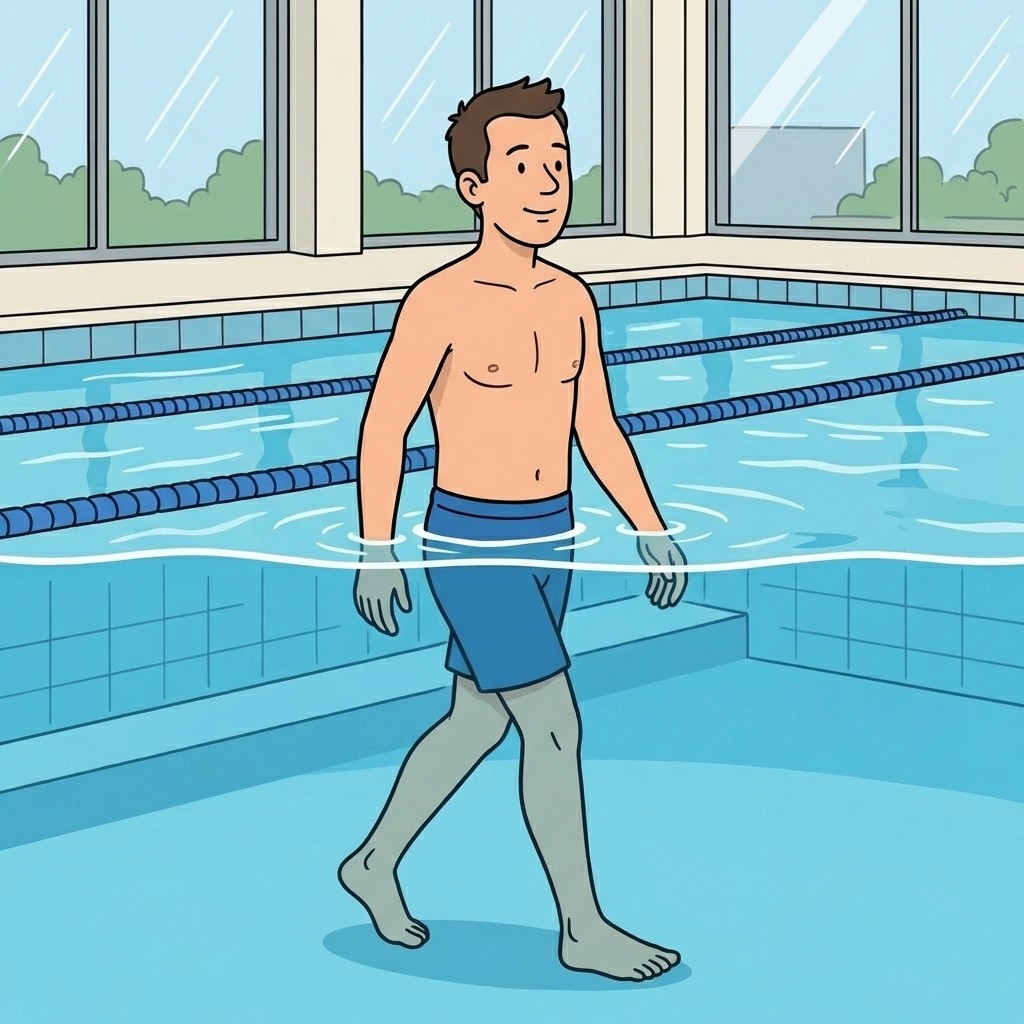
- Pool walking and gentle swimming can help fitness while reducing bodyweight load.
- Stationary cycling is often useful because range and resistance are easy to control.
- Elliptical training usually comes later because it is more dynamic and weight-bearing.
- Walking progression matters: build duration before pace, hills, or intervals.
- Pain, swelling, stiffness, or limp the next day means the total dose was too high.
Why cardio is difficult after Achilles rupture
Most cardio activities involve repeated lower-limb loading. Running, skipping, court sports, fast hill walking, and sprint intervals all ask the Achilles tendon to absorb and release force quickly. That is exactly what a recovering tendon is not ready for early on.
The tricky part is that your heart and lungs may feel ready before your tendon is ready. Once the boot is off and daily walking improves, you can feel more normal than the tendon-calf unit really is.
Modern Achilles rehabilitation supports early functional movement, but it is still dose-controlled. Zellers and colleagues found that early functional rehabilitation commonly includes weightbearing, range-of-motion work, and strengthening, but the exact exercises and timing vary widely between protocols. In plain language: movement matters, but the dose matters just as much.
If you are still in the boot-to-shoes transition, start with walking boot removal timing before harder cardio.
Best cardio options after Achilles rupture
There is no single best option for every patient. The right choice depends on your stage, wound healing, balance, calf strength, and symptom response.
| Cardio option | Why it helps | Main caution |
|---|---|---|
| Pool walking / water exercise | Water supports body weight and reduces tendon load | Slips, pool steps, and overlong sessions can still overload you |
| Swimming | Low impact, full-body cardiovascular stimulus | Avoid forceful push-offs, aggressive kicking, or unsafe pool entry |
| Stationary bike | Controlled range, low impact, easy to adjust resistance | Too much resistance can turn it into calf loading before you are ready |
| Elliptical | Smooth, more dynamic weight-bearing cardio | Usually later than cycling because the tendon is loaded through stance |
| Walking progression | Most functional and easiest to measure | Increase duration before pace, hills, or uneven ground |
The hierarchy is not rigid. Some protocols introduce stationary cycling relatively early, sometimes even in a boot. Other pathways wait until boot weaning and shoe walking are more stable. Follow your own surgeon or physiotherapist’s plan.
How to progress cardio safely
Use a simple rule: increase one variable at a time.
Do not increase duration, resistance, speed, and frequency all in the same week. Choose one small progression, then watch the next-day response.
A safer order is usually:
- Build comfortable walking duration.
- Add low-impact cardio such as pool walking or easy cycling once cleared.
- Increase duration before resistance or speed.
- Add more dynamic work such as elliptical only when gait, swelling, and calf control are stable.
- Leave running and jumping until your clinician clears higher-load milestones.
If swimming is your preferred option, read swimming after Achilles rupture: what to avoid and pool progression after Achilles rupture.
How to know if cardio is too much
The tendon often tells you the truth the next day, not during the session. A workout can feel fine in the moment and still be too much for your current tissue capacity.
Watch for:
- Increased swelling around the ankle or tendon later that day or the next morning
- More morning stiffness than usual
- New or rising tendon pain
- A worse limp or less push-off when walking
- Reduced quality in heel raises or physio exercises
- A feeling of sudden give-way, pop, or loss of tension
If you feel a pop, sudden sharp pain, sudden weakness, or a new gap in the tendon area, stop and seek urgent medical advice. If swelling climbs up the whole leg, especially with calf pain, breathlessness, or chest pain, seek urgent review for a possible blood clot.
What this means for your recovery
The practical goal is not to avoid cardio. It is to choose cardio that matches the tendon you have today.
Start with the lowest-risk option that gives a useful training effect: pool walking, gentle swimming once cleared, easy stationary bike, or controlled walking volume. Keep the first sessions deliberately short. If the tendon is calm the next day, repeat and progress gradually.
Avoid the common trap of replacing one missed run with an hour in the pool or a hard bike session. The heart may tolerate it. The tendon may not.
For broader stage guidance, see the Achilles rupture rehabilitation FAQ and the Achilles recovery course.
Frequently asked questions
What cardio can I do after Achilles rupture?
Common low-impact options include pool walking, gentle swimming once cleared, stationary cycling, elliptical later on, and a walking progression. The right choice depends on your stage, symptoms, wound healing, and physiotherapy plan.
When can I start cardio after Achilles rupture?
Cardio is reintroduced gradually, often starting with controlled low-impact options once your clinician clears them. The timing varies, so symptoms, walking quality, boot status, and calf control matter more than a date alone.
Is swimming good cardio after Achilles rupture?
Swimming can be useful because it is low impact and supports body weight, but it still loads the calf and tendon through kicking, turns, and pool entry. Start gently and avoid hard push-offs.
Is cycling safe after Achilles rupture?
Stationary cycling is commonly used because it has low impact and controlled range. Start with light resistance and reduce the dose if pain, swelling, stiffness, or limp increases afterward.
What signs mean cardio was too much?
More next-day pain, swelling, morning stiffness, a worse limp, or reduced heel-raise quality usually means the cardio dose was too high for your current tendon capacity.
References
- Zellers JA, Carmont MR, Gravare Silbernagel K. Defining Components of Early Functional Rehabilitation for Acute Achilles Tendon Rupture: A Systematic Review. Orthopaedic Journal of Sports Medicine. 2019.
- Massachusetts General Brigham Sports Medicine. Rehabilitation Protocol for Achilles Tendon Repair.
- Royal Berkshire NHS Foundation Trust. Achilles Tendon Rupture: Conservative Management.
- Banff Sport Medicine. Achilles Tendon Rupture Rehabilitation Protocol.
- Massen FK, Shoap S, Vosseller JT. Rehabilitation following operative treatment of acute Achilles tendon ruptures: a systematic review and meta-analysis. EFORT Open Reviews. 2022.
Primary source: Zellers JA, Carmont MR, Gravare Silbernagel K. Defining Components of Early Functional Rehabilitation for Acute Achilles Tendon Rupture: A Systematic Review